 +919170467985
People create mandala art as more than just a beautiful circular design. For centuries, cultures have used this powerful symbol to represent balance, unity, and harmony. The meaning & history of mandala art connects deeply to spirituality and meditation. Today, it continues to inspire people everywhere, from ancient temples to modern art studios.
Let’s explore the origin of mandala art and see how it evolved into the popular creative form we know now.
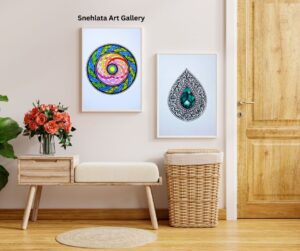
What is Mandala Art?
“Mandala” derives from Sanskrit, translating to “circle” or “center.” Artists create mandala art within a circular framework. Artists begin every design from one central point and build it outward into a symmetrical, balanced pattern.
Mandala art represents:
Wholeness
Balance
The universe
Inner peace
Because of its repetitive structure, people also use mandala art for meditation and relaxation
History of Mandala Art
We can trace the origin of mandala art back thousands of years to ancient India. People did not originally create mandalas as simple decoration. They used these sacred symbols in religious practices, meditation, and rituals.
Ancient sages believed the universe itself follows a mandala-like structure. So, they used mandalas as visual tools to understand life and existence.
Mandalas in Hinduism
In Hinduism, mandala art plays an important role. You can find mandalas in:
Vedic texts
Temple architecture
Yantras (sacred geometric diagrams)
Builders designed many Hindu temples using mandala layouts, with the center representing divine energy. People use yantras, like the Shri Yantra, for meditation and spiritual growth.
Here, mandala art symbolizes:
It connects the individual to universal spirit.
Sacred geometry
Cosmic order
Mandalas in Buddhism
Buddhism, especially Tibetan Buddhism, made mandala art famous through sand mandalas. Monks create incredibly detailed mandalas using colored sand. This process can take days or weeks.
After finishing, the monks destroy the sand mandala. This act teaches a key lesson about impermanence—it reminds us nothing lasts forever.
In Buddhism, mandala art represents:
The path to enlightenment
The universe
Mindfulness and discipline
Mandalas in India
In India, mandala art roots itself deeply in daily culture. Traditional art forms like:
Rangoli
Kolam
Alpona
all use mandala concepts. People create these designs during festivals, weddings, and ceremonies.
Traditionally, artists drew these mandalas on floors and walls using natural colors. They created them not just for beauty, but to bring positive energy and protection.
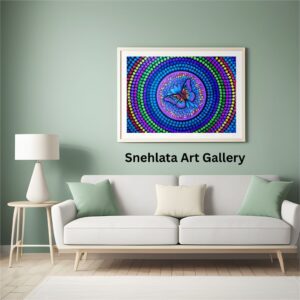
What Does Mandala Art Mean?
The meaning of mandala art goes beyond looking nice. Each part carries symbolism:
Circle: Wholeness and infinity
Center point: The source of creation
Symmetry: Balance and harmony
Repetition: The rhythm of life
Psychologically, mandalas help calm the mind. The famous psychologist Carl Jung believed mandalas represent the self and aid in emotional healing.
Traditional vs. Modern Mandala Art
Traditional mandala art followed strict rules—perfect symmetry, precise geometry, and a spiritual intention. The creative process itself was a form of discipline.
Modern mandala art now focuses on personal expression and therapeutic benefits. Today, artists experiment with new styles like freehand designs, 3D art, and digital mandalas. People use modern mandalas in home décor, fashion, tattoos, and as a relaxing hobby.
Why Try Mandala Art?
Creating mandala art is one of the easiest art forms to start. Beginners do not need advanced skills—just patience, basic tools, and practice. Many people find the process relaxing and good for improving focus and mindfulness.
The meaning and history of mandala art reveal a beautiful journey from sacred ritual to personal expression. It traveled from ancient spiritual rituals to a worldwide symbol of creativity and calm. Mandala art teaches us about balance, patience, and inner peace. Whether for meditation, decoration, or simple joy, mandala art remains a powerful and timeless practice.
By understanding its simple history and meaning, we can better appreciate every mandala we see or create.