 +919170467985
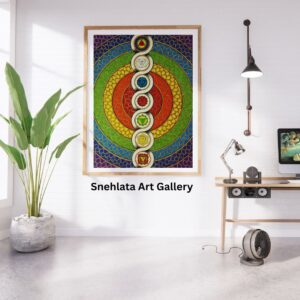
Vedic Mandala Art is gaining global attention today as people worldwide seek art that offers deeper meaning, balance, and spiritual connection. This sacred art form originates in ancient Indian Vedic wisdom, blending geometry, symbolism, and consciousness into striking designs. With the rise of mindfulness, meditation, and holistic living, these mandalas are now valued not just for their beauty, but for their ability to bring harmony, positive energy, and spiritual awareness into modern life.
Revival of Ancient Vedic Wisdom
Today, people are rediscovering Vedic Mandala Art. Consequently, this ancient practice is experiencing a powerful comeback. Artists and spiritual seekers now embrace it because it beautifully connects timeless Indian wisdom to modern life. Specifically, this art form takes inspiration from the sacred Vedas, reflecting deep ideas about cosmic balance and inner consciousness.
As global interest in mindfulness and yoga grows, more individuals value this art. Ultimately, it serves as a visual bridge, linking ancient philosophy with contemporary creativity while honoring India’s cultural heritage.
Roots of Vedic Mandala in Indian Spiritual Traditions
The history of Vedic Mandala Art begins in ancient India. Early practitioners used geometric patterns during rituals and in temple designs. They also created sacred diagrams known as yantras. These patterns symbolized the universe and helped focus the mind during meditation. Essentially, people created these mandalas as special tools to align their awareness with cosmic energy.
Symbolic Meaning of Mandala in Vedic Culture
In Vedic culture, the mandala is a meaningful symbol. Primarily, it represents wholeness, unity, and the cycles of life. Each part of the design carries significance. For example, different elements can symbolize natural forces, divine energy, or spiritual journeys.
Its balanced symmetry visually shows the harmony between our physical world and the spiritual realm.
Role of Sacred Geometry in Vedic Mandala Art
Sacred geometry plays a central role in this art form. Artists use precise shapes like circles and triangles to build each mandala. These shapes reflect universal order and natural harmony. Therefore, the designs are more than just decoration.
They are actually visual expressions of cosmic principles found in Vedic philosophy. Through careful symmetry, these mandalas convey stability, rhythm, and spiritual alignment.
Geometric Patterns and Universal Balance
Specific patterns create a sense of balance. For instance, circles often represent infinity and unity. Triangles and lotus shapes add layers of meaning. Symmetrical layouts mirror the interconnected nature of the universe. Together, these patterns establish both visual and energetic balance within the artwork.
Connection Between Geometry and Spiritual Energy
Vedic tradition teaches that geometry influences spiritual energy. According to this belief, carefully arranged forms channel positive vibrations. As a result, engaging with these patterns can support meditation, improve focus, and increase inner awareness through their harmonious structure.
Vedic Mandala Art and Mindfulness Culture
Currently, Vedic Mandala Art strongly supports modern mindfulness culture. People value it for promoting inner balance and mental clarity. Because these designs come from ancient Indian wisdom, they serve as effective visual tools.
They help cultivate calmness, awareness, and emotional stability. Their structured symmetry naturally guides attention inward, making them very relevant for today’s busy lifestyle.
Use of Mandala Art in Meditation and Yoga
Many meditation and yoga practitioners use this art. They observe the patterns to steady their minds and deepen concentration. The repetitive geometry helps reduce distractions. Consequently, it supports a deeper, more focused meditative state.
Healing and Focus Through Mandala Visualization
Additionally, mandala visualization promotes healing. Focusing on the intricate designs calms the nervous system and improves mental clarity. This practice encourages relaxation and emotional balance. Therefore, Vedic Mandala Art has become a valuable aid in mindfulness and therapeutic practices.
Influence of Indian Mandala Art on Global Design
Indian Mandala Art now influences global design trends. Designers blend its spiritual symbolism with contemporary aesthetics. As worldwide interest in holistic living grows, more creators embrace these patterns.
Their balanced structure and visual harmony work well in both artistic and functional spaces.
Mandala Art in Modern Homes and Interior Décor
Homeowners and interior designers frequently use this art. They apply Vedic Mandala designs to create calm, meaningful interiors. You can find these patterns in wall art, murals, textiles, and decorative panels.
People often place them in meditation rooms, living areas, and entryways to enhance the space with balance and positivity.
Use of Vedic Mandala in Global Art and Wellness Spaces
Wellness centers, yoga studios, and retreats worldwide increasingly feature this art. Its presence supports a peaceful atmosphere. Essentially, it aligns visual beauty with the practice of mindfulness, enriching the environment for visitors.
Artists Bringing Vedic Mandala Art to the World
Dedicated artists are introducing Vedic Mandala Art to a global audience. They blend ancient wisdom with contemporary expression. Through exhibitions, online platforms, and workshops, these creators preserve traditional symbolism while making it relevant for modern viewers. Their work highlights the spiritual depth and artistic discipline of Indian culture.
Contemporary Mandala Artists and Digital Platforms
Today, artists use digital platforms to share their work. Websites, social media, and online galleries allow worldwide sharing. These tools enable cross-cultural exchange and help global audiences connect with the spiritual meaning behind the art.
Digital visibility has truly expanded its appreciation across geographical boundaries.
Growing Interest in Handcrafted and Sacred Art
People worldwide are showing greater interest in handcrafted sacred art. Collectors and wellness communities value Vedic Mandala Art for its authentic creation process, symbolic depth, and energetic presence.
As a result, it is highly sought after for spiritual and mindful spaces.
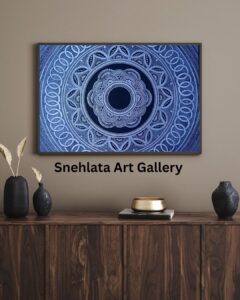
Why the World Is Drawn to Vedic Mandala Art Today
In today’s fast-paced world, people seek ways to reconnect with themselves. Vedic Mandala Art captures global attention because it offers a visual path to balance, mindfulness, and spiritual reflection. Its intricate patterns provide both aesthetic pleasure and a practical tool for meditation. The timeless appeal of these mandalas lies in their ability to convey harmony and cosmic order.
People turn to them to reduce stress, focus the mind, and invite calm energy into daily life. Modern audiences appreciate this art as both a spiritual practice and a creative expression. At places like Snehlata Art Gallery, each piece embodies meaning, balance, and beauty, making sacred art wonderfully relevant for our contemporary world.
Frequently Asked Questions (FAQ)
1. What is Vedic Mandala Art?
A sacred art form from India’s Vedic tradition, it uses geometric patterns to visually express the universe’s spiritual order and harmony.
2. Why is Vedic Mandala Art becoming popular worldwide?
It merges spiritual depth with a calming structure, offering balance and inner peace in a fast-paced modern world.
3. What distinguishes a Vedic Mandala from a Buddhist Mandala?
A Vedic Mandala symbolizes cosmic creation and principles, while a Buddhist Mandala is often a detailed meditative map of a deity’s enlightened realm.
4. What is the spiritual meaning of a Vedic Mandala?
It symbolizes the spiritual journey from outer existence to inner consciousness, embodying the unity between the individual soul and the universal divine.
5. Is Vedic Mandala Art used for meditation?
Yes. Its structured symmetry helps focus the mind, making it a powerful tool for quieting thoughts and achieving meditative awareness.
6. How does sacred geometry influence Vedic Mandala designs?
Sacred geometry forms its foundation, using shapes like circles and triangles to reflect the universe’s natural harmony and channel spiritual energy.
7. Can Vedic Mandala Art be used in home décor?
Yes. It enhances a home’s energy and aesthetic, often used to create calm, spiritually uplifting spaces.
8. Why is Indian Mandala Art gaining global recognition today?
It answers the modern need for mindful beauty, blending ancient symbolism with contemporary creativity to offer art that calms, inspires, and connects.
Vedic Mandala Art is gaining global attention, bridging ancient Indian spiritual wisdom with a modern quest for balance and mindfulness. Its sacred geometry, rich symbolism, and harmonious structure offer more than visual appeal—they provide a tangible sense of calm and intention. As more people turn toward holistic living and conscious design, Vedic Mandala Art resonates across cultures as both a meditative tool and a timeless form of purposeful beauty, reaffirming its relevance in today’s world.