 +919170467985
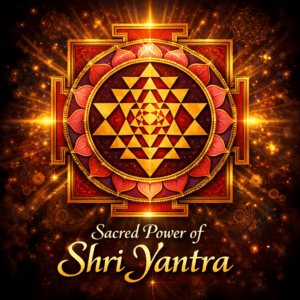
The sacred power of the Shri Yantra lies not just in its beauty, but in its deep spiritual meaning. Known also as the Sri Chakra, this is no ordinary design. It is a revered symbol that acts as a map of the universe and our own inner consciousness—bringing everything into perfect balance.
For centuries, spiritual seekers have turned to the Shri Yantra as a powerful tool for meditation, inner harmony, and growth. Its layers of interlocking shapes and lines follow a sacred geometry that mirrors the order of the cosmos. When you meditate on it, your mind gently moves from distraction to stillness, from complexity to calm.
This is why the Sacred power of Shri Yantra is much more than art—it is a gateway to peace, focus, and spiritual connection.
Why Shri Yantra Is Considered the King of All Yantras
Shri Yantra is the “king” because it balances both spiritual growth and material well-being. Its nine interlocking triangles represent the sacred union of divine masculine and feminine energy. This perfect geometry is believed to attract prosperity, clarity, and spiritual awakening.
Relevance of Shri Yantra in the Modern World
In our fast, distracted world, the Shri Yantra offers a natural way to find focus and calm. Its balanced design helps quiet the mind and restore peace. Whether used for meditation or placed in your space, it remains a timeless anchor for harmony in modern life.
Geometry, Consciousness, and Energy
Every line and point in the Shri Yantra carries deep meaning and energy. The central dot (bindu) represents unity and endless possibility. This ancient symbol teaches us that geometry is more than shapes—it is a living map of the universe and our own inner consciousness.
Origins & Historical Significance of Shri Yantra
The Sacred power of Shri Yantra has its roots in ancient India’s spiritual traditions. For centuries, it was used not just as a symbol, but as a living spiritual tool in texts, rituals, and temple designs.
References in the Vedas, Tantras, and Puranas
While the Vedas speak of cosmic balance, detailed descriptions of Shri Yantra appear in Tantric texts and the Shri Vidya tradition. These texts present it as a form of divine energy used in meditation and worship. The Puranas also link it to Goddess Lalita Tripurasundari—the supreme feminine power.
Shri Yantra in Shakta and Tantric Traditions
In Tantric practice, Shri Yantra is at the heart of Shri Vidya, a respected spiritual path. Meditating on it is seen as worshiping the Goddess herself. Each layer of its design represents a step toward higher awareness.
Role of Shri Yantra in Ancient Indian Temples
Many ancient temples were built using Shri Yantra as an energetic blueprint—often placed in the innermost shrine to align the space with cosmic forces. Even today, some temples preserve Shri Yantras in their foundations.
Evolution from Ritual Tool to Sacred Art Form
Over time, Shri Yantra evolved from a ritual object into a form of sacred art. It’s now created as meditative drawings, metal engravings, and artworks—bringing its spiritual energy into homes and creative practices worldwide.
Symbolism of Shri Yantra
Every part of the Shri Yantra holds deep spiritual meaning. It’s more than a design—it’s a map of the universe and the inner self.
Meaning of the Word “Shri”: Prosperity and Divine Feminine Energy
“Shri” is a very sacred word in Sanskrit. It means prosperity, abundance, beauty, and good fortune. It’s also deeply connected to Goddess Lakshmi, who represents divine feminine energy and grace.
In the Shri Yantra, “Shri” means much more than just money or things. It stands for spiritual richness too—things like a calm mind, inner harmony, and true contentment.
This teaches us an important truth: real prosperity isn’t just about what you have, but also about how you feel inside. It’s about finding balance between your outer success and your inner peace.
Shri Yantra as the Cosmic Map of the Universe
The Shri Yantra is like a map of the universe—but a map of harmony and perfect balance.
Its beautiful, interlocking shapes—the triangles, circles, and lotus petals—symbolize everything that exists, from the huge cosmos outside to the quietest thoughts inside us. Just like the universe began from one point and grew, the Shri Yantra also unfolds from its center, called the bindu, which symbolizes the source of all creation.
Union of Shiva and Shakti
Its design represents the sacred balance of Shiva (consciousness) and Shakti (creative energy). Their union is seen as the source of all existence.
- Shiva is represented by the triangles pointing upward. This stands for stillness, pure awareness, and consciousness—like a calm, peaceful mind.
- Shakti is shown through the triangles pointing downward. This symbolizes energy, movement, and creativity—the force that brings things to life.
Outer World and Inner Consciousness Symbolism
The outer layers symbolize the material world. As you move toward the center, you’re guided inward—from distraction to stillness, toward pure awareness.
Geometry of Shri Yantra: The Heart of Sacred Geometry
The Sacred power of Shri Yantra comes from its precise and sacred geometry—it’s much more than a drawing.
Structure of Shri Yantra: Nine Interlocking Triangles
At the heart of the Shri Yantra are nine triangles, perfectly arranged around a central point called the bindu. Each triangle is placed with precision to create balance and harmony, and together they reflect the deep connection between our material world and our spiritual life.
Four Upward Triangles: Shiva Principle
The four triangles pointing upward represent Shiva—the energy of pure consciousness, stillness, and awareness. They stand for clarity, stability, and the unchanging truth of reality. Think of them as an anchor, helping us rise above distractions and connect with deeper awareness and inner peace.
Five Downward Triangles: Shakti Principle
The five triangles pointing downward represent Shakti—the creative, moving, and nurturing force of the universe. They symbolize energy, life, and the power to create and manifest. These triangles bring motion, vitality, and grounding to the design—reminding us that energy flows into everything we see and experience.
How 43 Smaller Triangles Are Formed
When these nine main triangles come together with perfect precision, they create 43 smaller triangles. Each of these tiny triangles holds its own special meaning and energy. Together, they represent all the layers of existence—from the physical world we live in to the deeper, spiritual levels of reality. This beautiful complexity is what makes the Shri Yantra a complete and sacred map of life and creation.
Why Symmetry and Precision Matter
Even a small error in the design can disrupt its energy flow. That’s why it’s traditionally made with great care—its balance affects its spiritual power.
Form Follows Energy
In Shri Yantra, geometry is alive. Correct proportions create harmony, like in nature itself. This makes it not just art, but a doorway to higher awareness.
The Nine Layers of Shri Yantra: A Journey Inward
Shri Yantra has nine layers or “avaranas,” each representing a step on the spiritual journey—from the outer material world to the inner world of bliss.
- The Outer Square (Bhupura) – The Physical World
This boundary represents the material world, our foundation and sense of safety. It helps focus our attention inward. - Sixteen-Petal Lotus – Fulfillment of Wishes
Symbolizes balanced desires and emotional harmony. Teaches that our wishes can be uplifted and refined. - Eight-Petal Lotus – Awakening
Invites inner movement and stirs awareness, encouraging spiritual growth beyond comfort zones. - Fourteen Triangles – Good Fortune & Alignment
Reflects alignment between our efforts and the universe’s support, bringing confidence and purpose. - Ten Triangles – Achievement
Focuses on realizing goals through discipline and intention, helping to manifest meaningful results. - Ten Triangles – Protection
Offers inner stability and shields us from negative energies, fostering trust and peace. - Eight Triangles – Healing
Supports emotional and mental healing, helping release stress and restoring balance. - Central Triangle – Spiritual Mastery
Represents higher awareness, concentration, and spiritual accomplishment. - The Central Point (Bindu) – Bliss and Oneness
The innermost point symbolizes pure stillness, unity, and divine consciousness—the goal of the inward journey.
Colors & Materials Used in Shri Yantra
The colors and materials of a Shri Yantra are chosen carefully—they influence its energy and purpose.
Traditional Colors:
- Red for energy and vitality
- Gold for purity and prosperity
- White for clarity and peace
Significance of Gold Shri Yantra:
Gold is believed to radiate steady, positive energy and is linked to stability and divine presence, making it especially powerful.
Common Materials:
- Copper – helps conduct energy
- Crystal – amplifies intentions
- Paper & Hand-Drawn – valued for the focused intention put into them
Why Hand-Drawn Yantras Carry Stronger Intention
When drawn by hand with focus and devotion, a Shri Yantra becomes more than an image—it becomes a personal and energetically alive spiritual tool.
Shri Yantra and Chakra Alignment
The Shri Yantra is a powerful tool for harmonizing your body’s energy centers (chakras). Its layers mirror the human energy system, helping to balance and activate it through meditation.
- Link with the Seven Chakras: Each outer layer relates to the lower chakras (stability, creativity, emotion). Moving inward connects to higher chakras (heart, intuition, insight). The very center aligns with the crown chakra—pure awareness and unity.
- Raising Consciousness: Meditating on the Shri Yantra draws your mind inward, quieting distractions and expanding awareness.
- Calming the Mind & Emotions: Its balanced design reduces stress, improves focus, and promotes emotional stability.
- Balancing Material & Spiritual Life: The yantra teaches integration—supporting both worldly success and inner peace, without needing to choose one over the other.
Benefits of Shri Yantra
Practiced regularly and respectfully, Shri Yantra offers deep but gradual benefits to mind, life, and spirit.
- Mental Clarity & Focus: Its symmetry helps calm and center the mind, reducing clutter and improving concentration.
- Abundance & Prosperity: Encourages a balanced mindset toward wealth—aligning intention with disciplined action.
- Emotional Stability: Harmonizes emotions, reduces reactivity, and builds patience and resilience.
- Spiritual Growth: Guides awareness inward, supporting self-inquiry and a deeper connection with yourself.
- Support for Healing & Meditation: Acts as a visual anchor in meditation, aiding stress relief, grounding, and inner calm.
Shri Yantra in Art and Mandala Practice
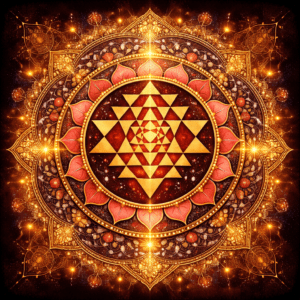
In the art world, Shri Yantra is seen as the ultimate form of sacred geometry—a perfect blend of beauty, precision, and spiritual meaning.
- Highest Form of Sacred Geometry: Its design is mathematically perfect and energetically intentional—every line has purpose.
- Art vs. Energy: While decorative mandalas are about beauty, Shri Yantra is about energetic accuracy. Even small errors can change its effect.
- Intention Matters: When drawn by hand with focus and reverence, it carries the artist’s meditative energy, becoming more than just an image.
- View of a 3D Mandala Artist: Creating Shri Yantra—especially in 3D—is an act of devotion. It’s less about self-expression and more about aligning with universal harmony through discipline and deep respect for form.
How to Place and Use Shri Yantra Correctly
Use your The Sacred power of Shri Yantra with care to make the most of its calm and focused energy.
Where to Place It
- Best Direction: Face it east (for clarity) or north (for positive energy). What matters most is keeping it in a clean, quiet, and respected spot.
- At Home: Put it where you meditate, pray, or relax.
- At Work: Place it where you can see it easily, to help with focus and calm.
Daily Meditation Practice
- Simple Meditation: Sit comfortably, look at the yantra, and let your eyes gently move from the outside toward the center.
- Soft Gazing: Just look at it softly, without staring hard. This helps calm and steady the mind over time.
What to Avoid
- Don’t put it in cluttered, noisy, or ignored places.
- Avoid treating it as only decoration or moving it often without care.
- Keep it in one chosen spot and handle it respectfully to deepen your connection.
Common Misconceptions About Shri Yantra
Some ideas about Shri Yantra aren’t quite right—here’s what’s true.
- “Only for Rituals”: Not true. While it comes from sacred traditions, it’s equally powerful for meditation, art, and mindfulness.
- “Digital Yantras Work the Same”: Digital images are helpful for learning, but physical or hand-drawn yantras carry a stronger mindful presence.
- “Bigger Means More Power”: Size isn’t what matters. A small, accurate yantra created and placed with care is just as effective.
Shri Yantra in Modern Life
Shri Yantra fits smoothly into today’s world—supporting mindfulness, creativity, and balance.
- In Yoga & Healing Spaces: It helps create a calm atmosphere, aiding focus and presence during practice.
- In the Workplace: In offices or studios, it subtly encourages clarity, lowers stress, and reminds us of balance.
- For Artists & Seekers: Drawing or meditating with the Shri Yantra is more than just art—it’s a mindful ritual. It’s an invitation to slow down, go inward, and live with deeper purpose—connecting timeless wisdom to today’s world.
Conclusion
The Sacred power of Shri Yantra is more than a design—it’s a mindful path to inner balance, clarity, and peace. It doesn’t belong only in tradition; it’s for everyone—artists, beginners, spiritual seekers, meditators, and anyone curious about sacred geometry.
If you’re ready to truly understand Shri Yantra by learning its art and meaning, join me at Snehlata Art Gallery. Through guided online classes, we will explore sacred geometry—not just as an art, but as a practice in awareness and calm.